
The Snow Division
The Country is Divided

The USA is divided. We all know this. But it’s not just red and blue, it is also white and brown. I am not talking about race here — I am talking about snow.
While New York City struggles to get snow shoveled off the streets, people in the West are looking at our brown mountain tops and wondering where all of our snow went. The trend has been apparent for several years now, but this year it is becoming stark. We call it the Snow Drought.
The polar vortex that in normal years confines the bitterest cold to the polar regions in winter, has become unstable. Blobs of cold spill out onto the eastern half of the nation, freezing fruit trees in Florida and creating Snowmageddon in cities on the Eastern Seaboard. Meanwhile, a persistent high pressure ridge over the Rockies blocks our winter storms. We see weeks of warm sunny days here in Oregon and our mountaintops are brown and bare from the coast to the Rockies and beyond. This portends a terrible fire season this summer and I am worried.
In the East, writers are tallying up the costs of winter:
https://substack.com/home/post/p-188945031
In the West, writers are worried about the coming summer:
https://substack.com/home/post/p-184286251
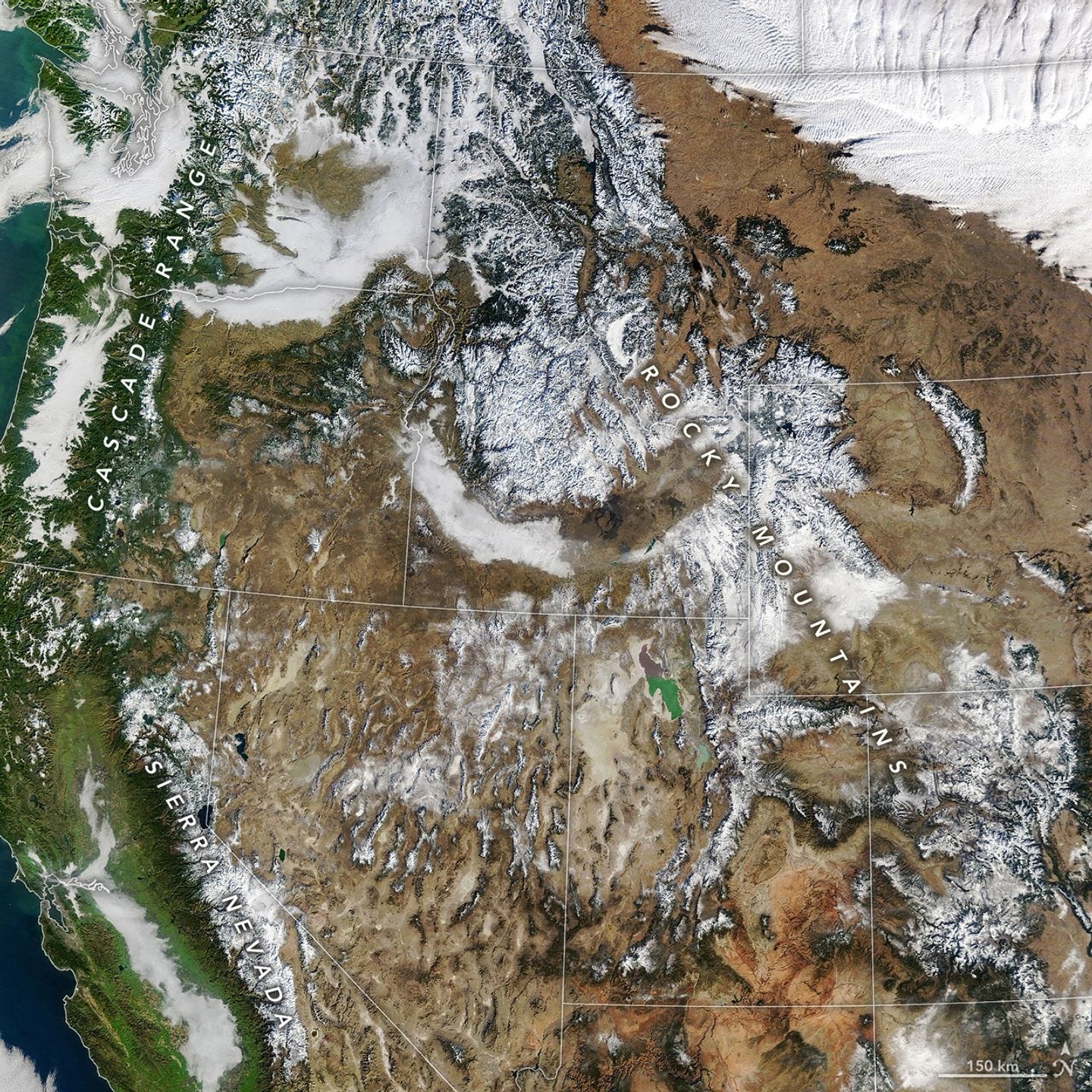
We finally got our first snow here last week - a total of maybe four inches that is now melted. We have a bit more rain coming this week, but we are still in deficit. All we can do now is hope for a rainy spring.
So is all this weather disruption just a result of burning fossil fuels or is there something else going on?
There is a growing awareness of the importance of land cover and vegetation to the hydrological cycle that I have talked about before. I am just learning about these connections, but if you want the latest news, follow The Climate Water Project by Alpha Lo here on substack:
It’s all about evapotranspiration and nucleation sites for raindrops to form. Without vegetation, there is no evapotranspiration and no rain. We have cut down too many trees, cleared too much land, and poured too much pavement.
Revegetating the earth may be far more important than reducing our fossil fuel use for maintaining a livable planet because the natural hydrological cycle plays a very large role in cooling the planet by transferring heat from the earth’s surface to the upper atmosphere. Researcher Anastassia Makarieva explains how this works:

The other big change we have made is in water storage. Channelizing water and storing it in reservoirs instead of wetlands drains the moisture out of soils while heating up water that should be staying cool in the ground.
Bare soils without vegetation are also vulnerable to erosion when the rains do come. Gullies form in the headwaters and water drops into deep channels, again depriving soils of moisture to sustain vegetation.
So what can we do about this? Education is important, but having an impact on the big decisions about land clearing and dam building is not easy to do. Where we might begin to make a difference is in repairing some of the damage on our own properties and on public lands.
Incorporating biochar into restoration work can have real benefits to soil moisture. There are plenty of places in the West where we need to remove fuels to protect communities from wildfire. Generally this slash material is burned just to get rid of it. If we make biochar in our burn piles, we keep some carbon and particulates out of the atmosphere, and we add moisture-loving biochar to the soil.
Biochar made on site and quenched with water is naturally hydrophilic or water-loving. When rain strikes a patch of biochar it immediately soaks in and spreads out in the soil below. The water loses kinetic energy by slowly spreading and sinking rather than gathering and rushing downhill, carving deeper channels as it goes.
Our Biochar On Site group has been working for several years now to bring this kind of information to light and we have a strong network of people and companies who are engaging in Biochar On Site production and applications.
John Webster, our Biochar On Site development director, sent me this video from his friend Grant Davis who rides mountain bike trails in Southern California. Grant had been noticing gullies forming in the bike trails and he took the initiative to stuff biochar into the gullies. Here is what he saw after a rain:
He immediately noticed a difference! After the rain he could see that the water easily soaked into the biochar, preventing erosion and stabilizing the gullies. This is something we can all do. Thank you Grant, for taking action.
Now, back to the divided country: Are we really so divided?
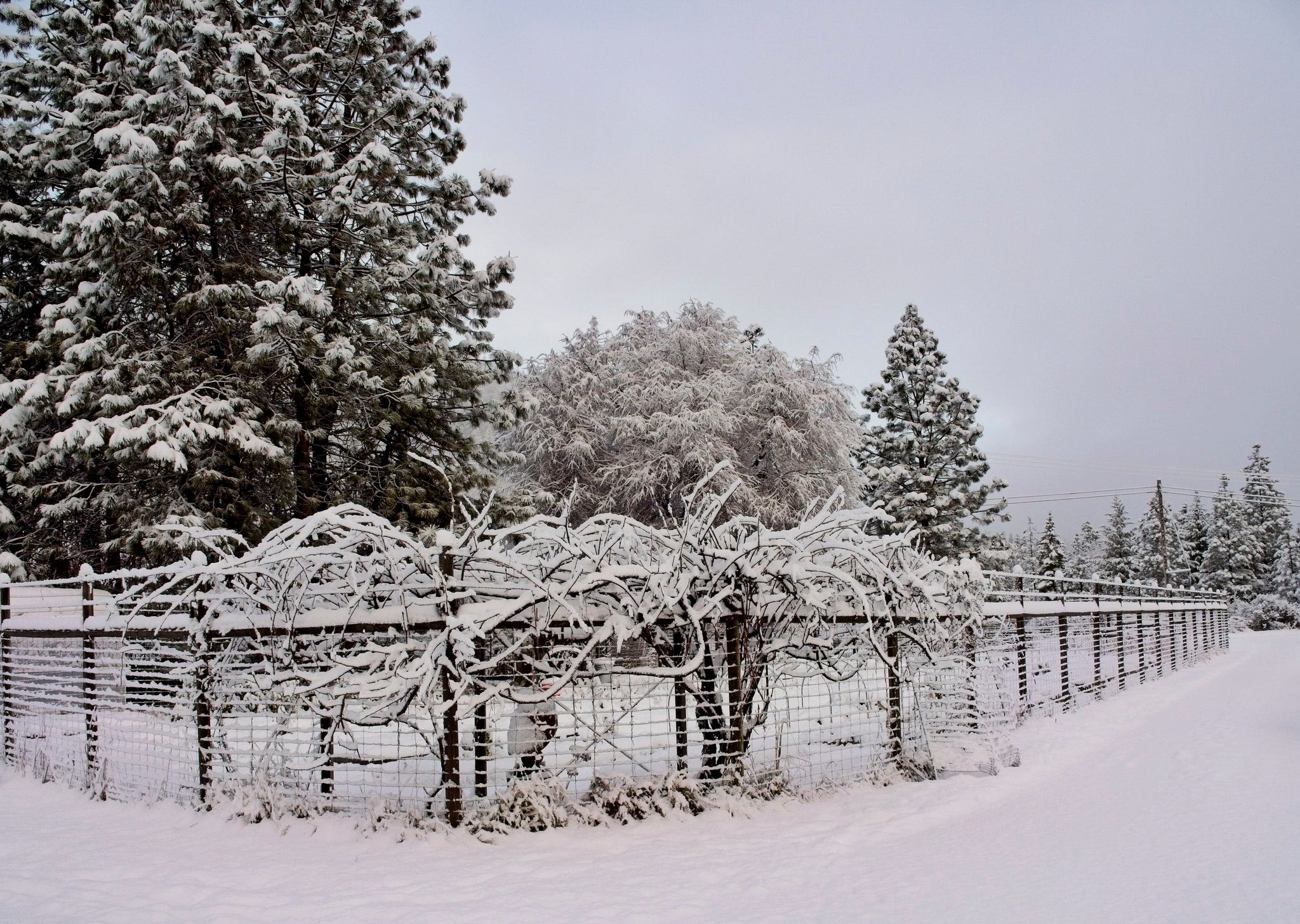
I was going through some of my photos the other day and found these two, side by side in my gallery. These are both common scenes here in Oregon - often on the same property. I love Oregon. As a veteran of the timber wars here in the 1990s, I learned that almost everyone on both sides of the logging issue cares about the forests. Money complicates it, but most people want to do the right thing. We all love water and trees, so let’s get together and work to save our water planet, stuffing one gully at a time, if that’s what it takes.


If you want to learn more about practical biochar tips and tricks for growing your own food, or you are interested in stewardship biochar for restoring natural ecosystems and biodiversity, please check out some of my links below:
The Biochar Handbook at Amazon.com
The Biochar Handbook at Bookshop.org
Purchase Kelpie’s Practical Biochar Course
Order your Ring of Fire Biochar Kiln®: RingofFire.earth
Check out my YouTube channel: www.youtube.com/@KelpieWilson
Biochar On Site network for practitioners of stewardship biochar
We like the char here in eastern Kansas on foot trails because unlike wood chips that hold the water and turns into a mucky mess, the char lets the water through and the paths dry out much quicker. Still trying to figure out how to keep the char in place on even mild slopes when it rains hard, tho: it floats away!
Massive blessings and best Kelpie_ Love (and read/support...) both of your sources above. I also struggle how to communicate their points of view re: climate as well as the great amounts many of us agree on. PS It's me- Dale Hendricks- dale@greenlightplants.com for some reason our great buddy and housemate Charlie is who my desktop thinks this is on Substack, hugs