
Shadowing the Groundhog
In the time of Imbolc

In the Celtic calendar, Imbolc marks the season of Spring. The word “Imbolc” comes from the Old Irish i mbolg or “in the belly,” referring to the time when sheep are giving birth and lactating, and the grass greens up and grows. It’s a time to wake from winter’s slumber and begin the work of helping Nature thrive. The seed order is in and now it is time to inspect the land and see what’s happening out there.
Walking out into the field, I spied numerous ground squirrel mounds. These are our groundhogs and they have been active this winter, plowing up the ground. You can see new seedlings sprout in the freshly tilled earth. I could also see the good work our rodents had done to till in biochar from our biochar burn pile patches.
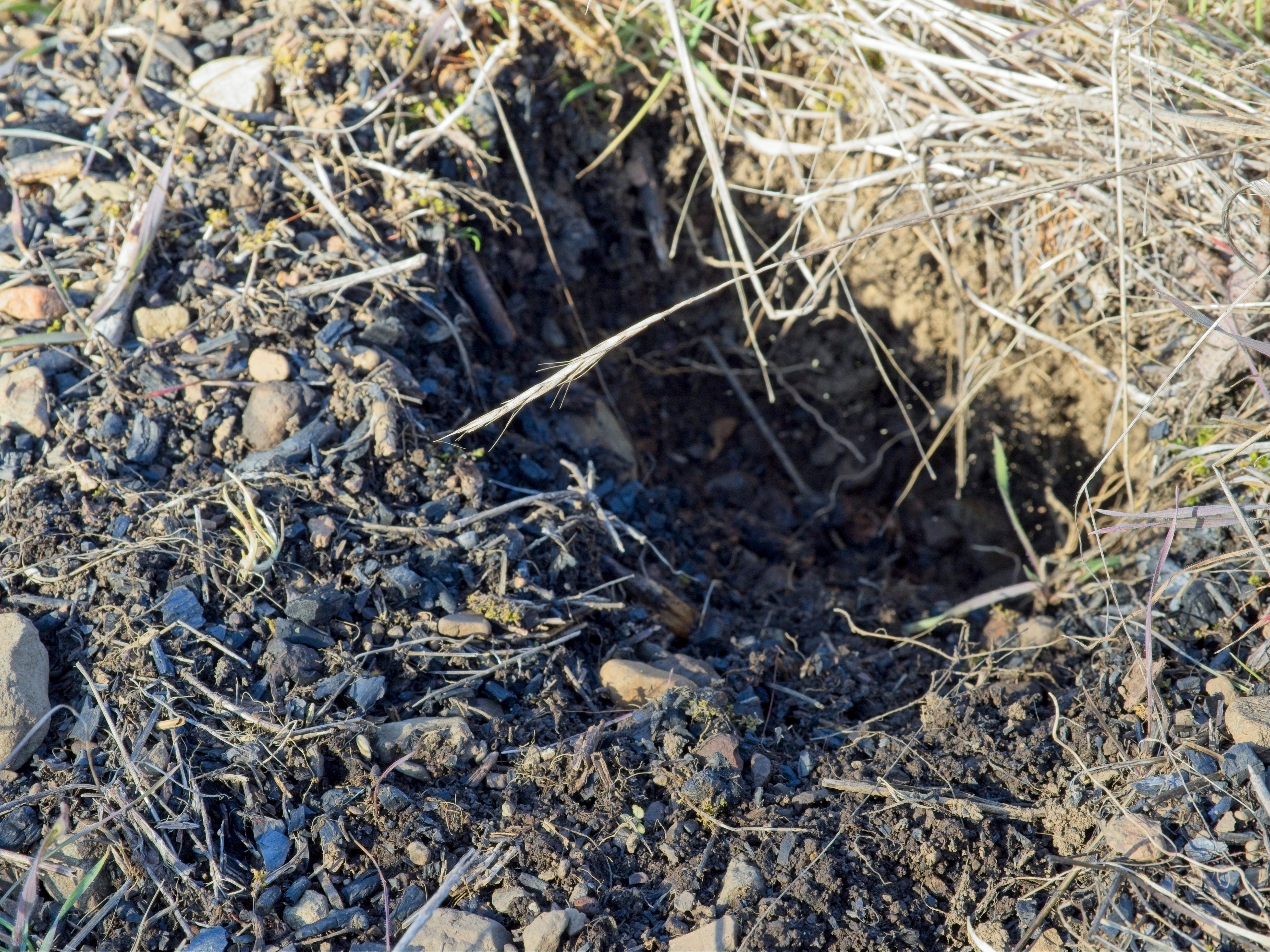
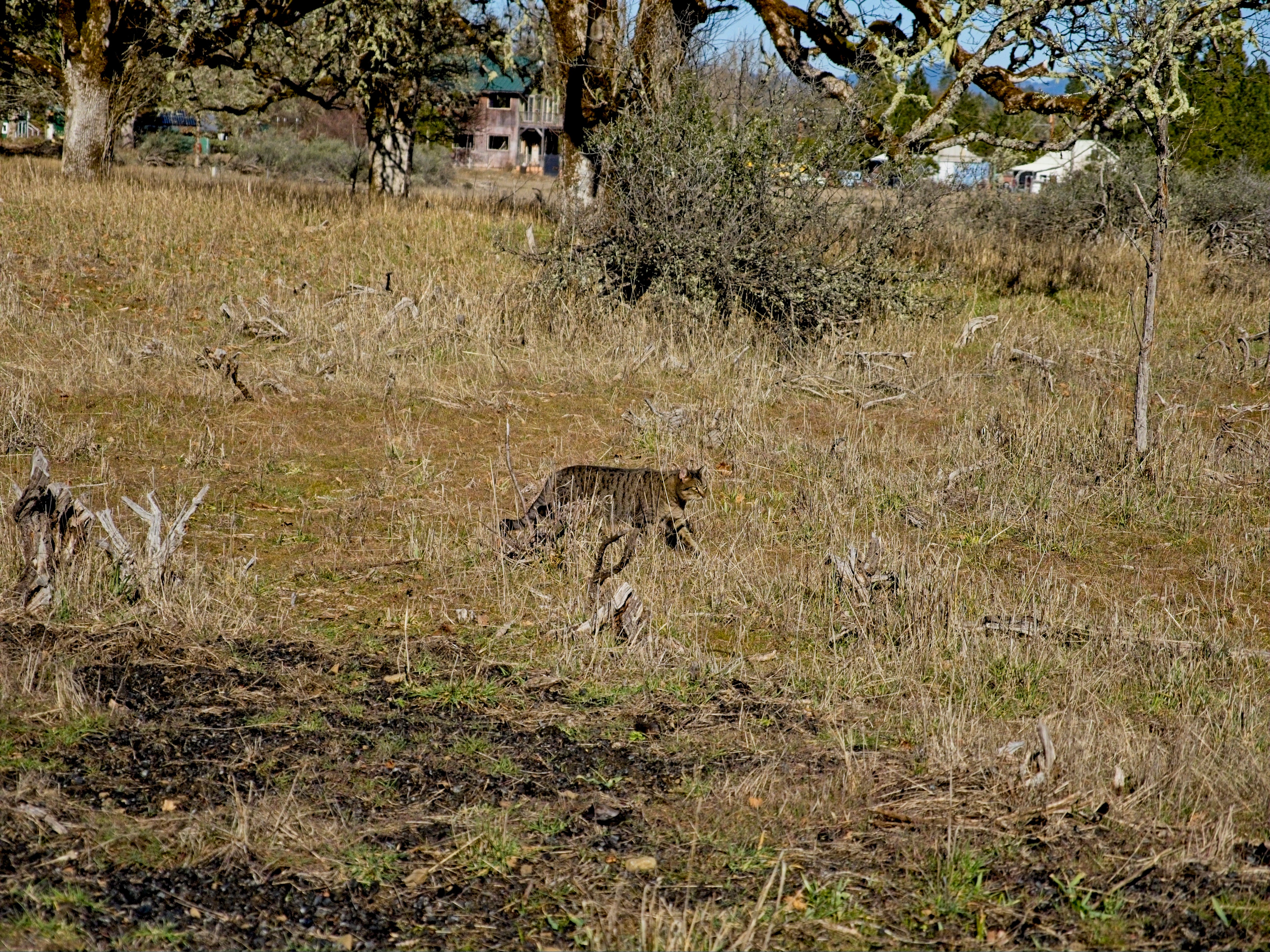
In the forest, I have noticed that abundant leaf litter quickly covers biochar patches, adding organic matter, so soil forms more quickly. The field is different. Leaving thick patches of biochar in our field tends to suppress annual grasses. The perennial bunch grasses and forbs have no trouble growing up through an inch or two of biochar mulch, but the annual grasses are easily suppressed. That’s good to know if your objective is to suppress invasive annuals, but I am not sure if that is a good thing in our field or not. I don’t know that much about grasses, although I do know that we have a lot of non-native grasses.
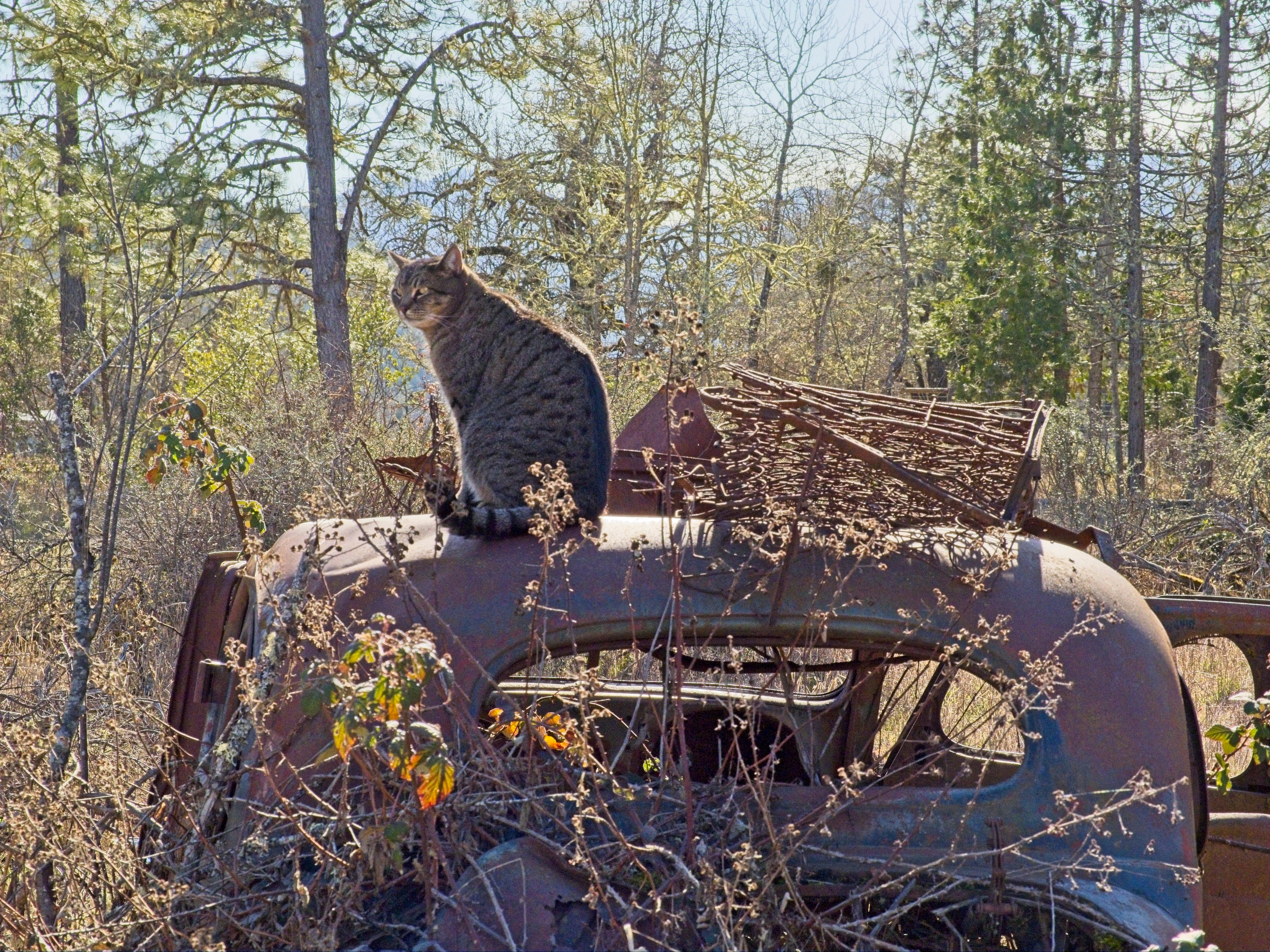
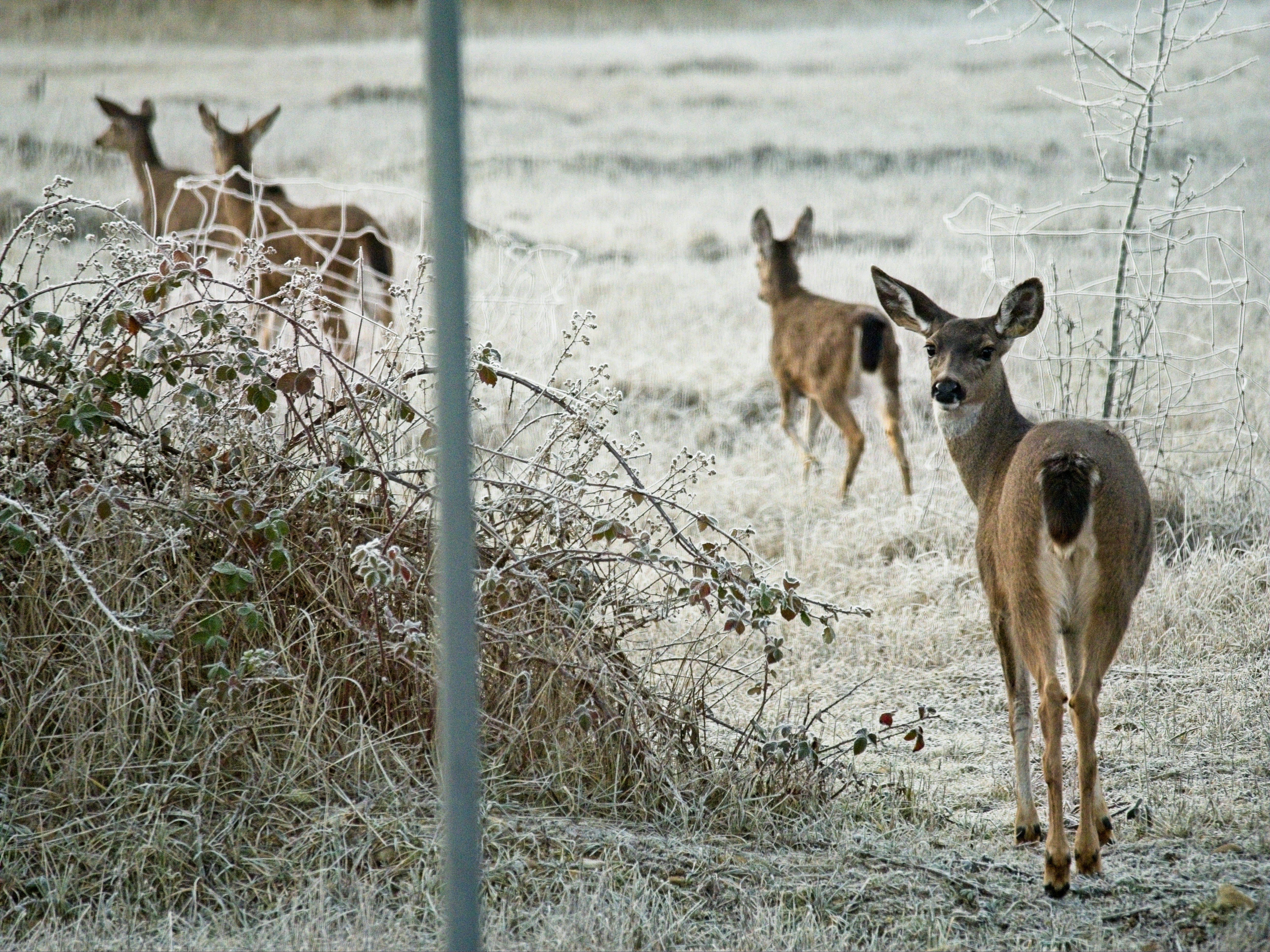
The field is really a sparsely populated oak savannah and nobody grazes there but deer and rabbits. One of these days, we hope to do a broadcast burn here to see if we can help encourage the natives and discourage the invasives.
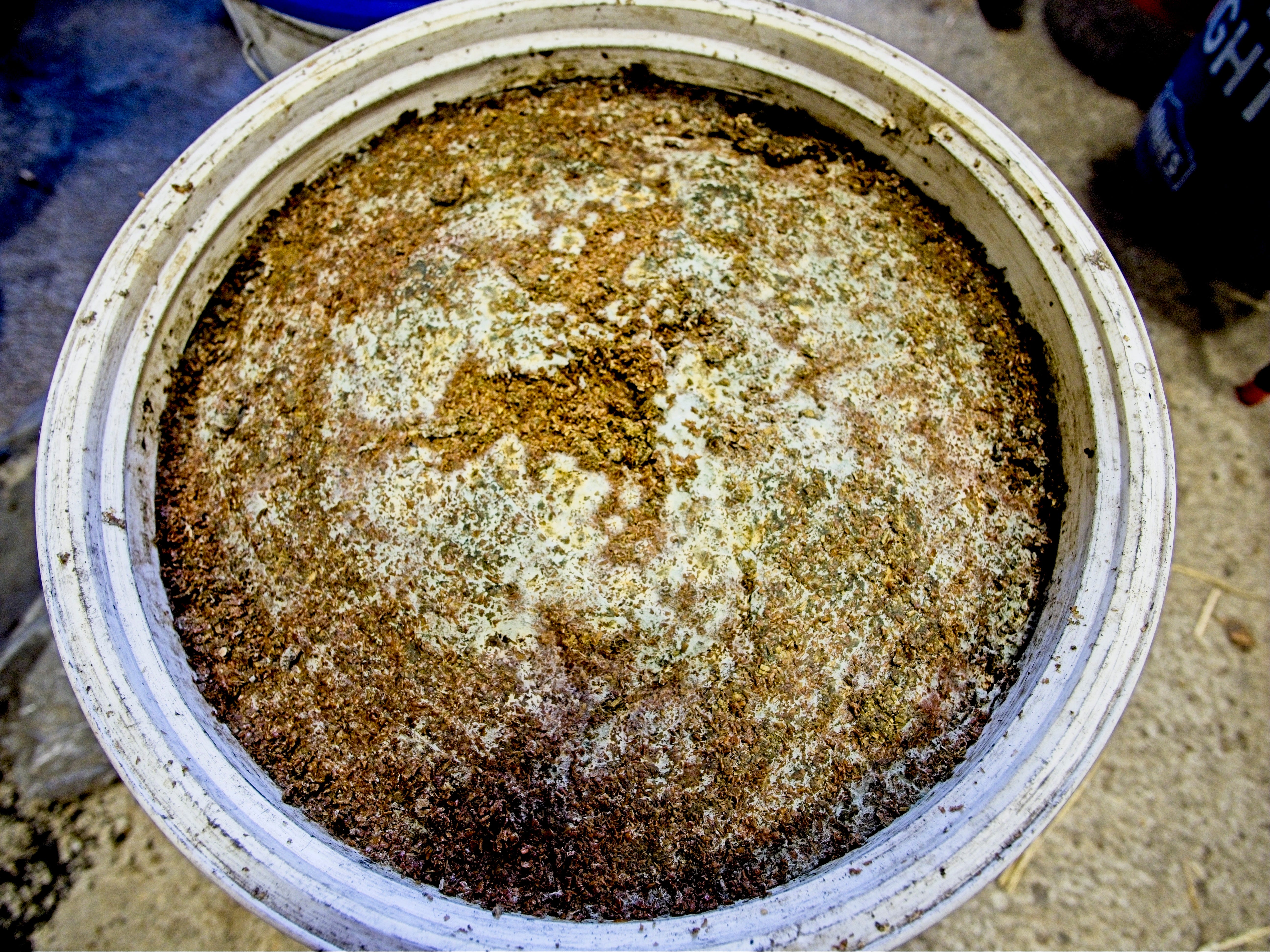
Meanwhile, back at the garden, I am preparing fertilizers and ferments for seed starting. The first project was an experiment to ferment biochar with bokashi. I have done this a lot of different ways but this time I took a five-gallon bucket of wet bokashi (wheat bran fermented with molasses and EM-1) and mixed it with an equal amount of fine grained biochar and fermented it in a sealed tote for another two weeks.
Normally what I do is dry the bokashi by itself in the greenhouse and mix it with biochar later. It’s important to dry the wet bokashi once it is done fermenting, or else it can mold. Dried bokashi can keep for years, staying biologically active. But since I made the bokashi late in the fall, greenhouse drying was not going to work very well. I figured that if I mixed it with biochar, that would help it dry faster.
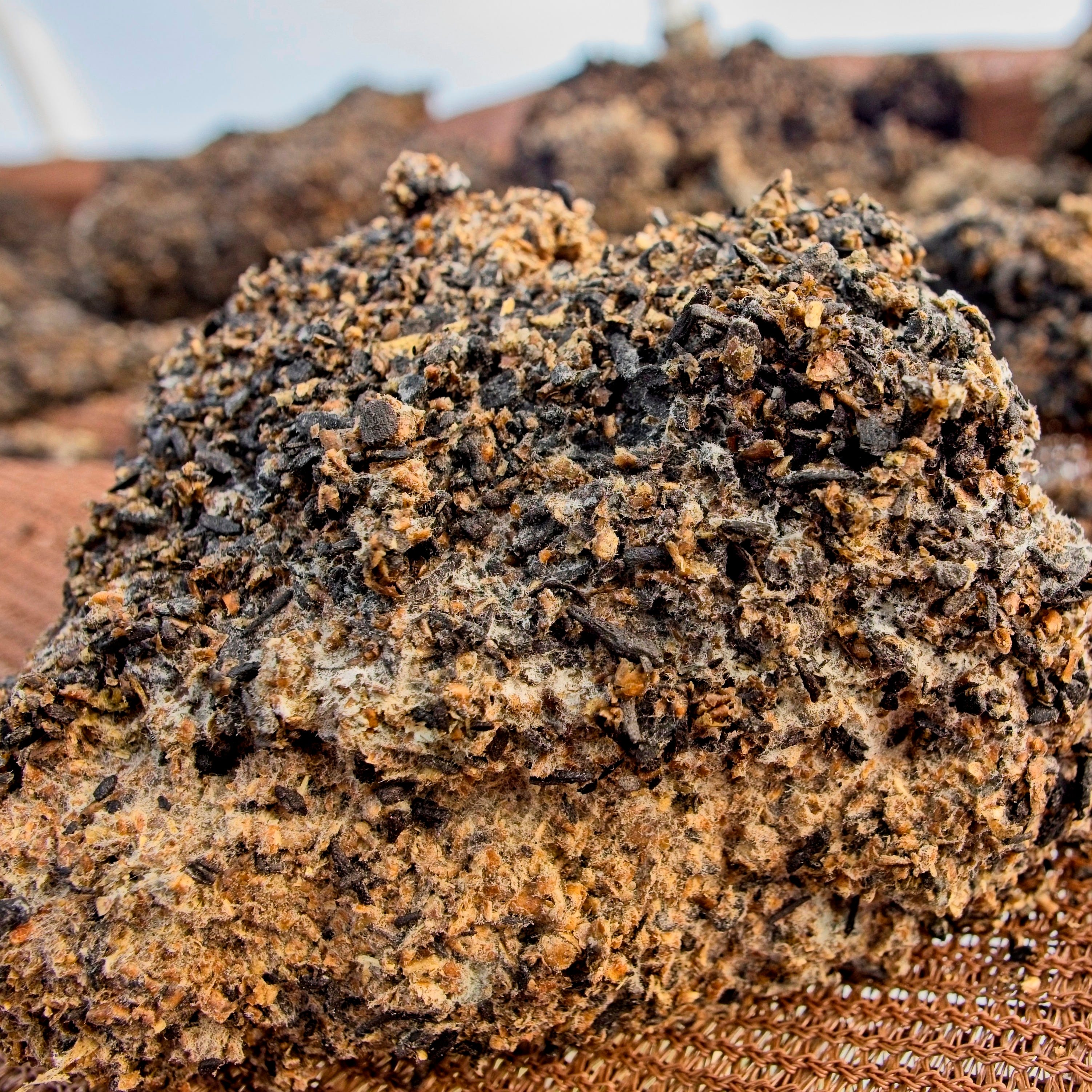
Well that worked out just great. The extra two weeks of fermentation with the biochar baked a lovely biochar-bokashi cake. The bacteria infused into the biochar and bound it all together with actinomycetes mycelia, which are filamentous, branching networks of hyphae that resemble fungal structures. While they are prokaryotic bacteria and not fungi, they grow as a network of thread-like filaments that can differentiate into aerial mycelium and substrate mycelium to absorb nutrients and produce spores (according to Wikipedia).
Now after a week of drying in the greenhouse (it has been sunny), these lumps are all dry and ready to safely store for use in my compost buckets and in soil mixes.
I have also been busy preparing my potting soil for seed starting. I learned a lot about compost extract from Matt Powers and his guests last month at R Future and I decided to try it for my potting soil. I usually just add compost to the potting soil because I want beneficial microbes to be present right at the start of the plant’s life, but that comes with a cost - sprouting weed seeds that compete with my crops.
I took some inspiration from this recipe for compost extract that calls for adding nutrients to your finished compost and letting it feed and multiply the microbes for a day or two before extraction. Then you take this enhanced compost and add it to a bucket of water and stir for awhile. I stirred for 5 minutes, let it sit for an hour and stirred for 2 more minutes before straining out the solids. I then added the liquid to a plain peat potting soil.
Compost extract is different from aerated compost tea. It make more sense to me because you are growing microbes that live in soil, not the ones that thrive in water. I have made compost tea before, aerating it with an aquarium bubbler for 24 hours, and then looked at it under the microscope. It did not appear to have a huge abundance of microbes. When I examined the compost extract I made, it was pulsing with all kinds of tiny critters. I don’t really know what I am looking for, though I can tell a yeast from a bacillus, but these guys were all living in my compost, and I know my plants like that.
So far I have started lettuce and onions in potting soil enhanced with my compost extract. Only the lettuce has spouted and it looks good. No weed seeds. I will keep you posted. In the meantime, Happy Spring!
Also, if you don’t have enough biochar in your life and you would like to just make it yourself, check out my spring sale on the Ring of Fire Kiln. Use code KWROF to get $100 off your kiln order.

If you want to learn more about practical biochar tips and tricks for growing your own food, or you are interested in stewardship biochar for restoring natural ecosystems and biodiversity, please check out some of my links below:
The Biochar Handbook at Amazon.com
The Biochar Handbook at Bookshop.org
Purchase Kelpie’s Practical Biochar Course
Order your Ring of Fire Biochar Kiln®: RingofFire.earth
Check out my YouTube channel: www.youtube.com/@KelpieWilson
Biochar On Site network for practitioners of stewardship biochar
I have always been skeptical about combining wet bokashi with biochar beyond the bokashi bucket. This is because what we want in the soil are the "good guy" microbes and non-parasitic nematodes and uniformly those are aerobes, not anaerobes. A wet bucket method of composting such as bokashi is an anaerobic culture. An aerated compost tea, with adequate nutrients to favor growth, creates an aerobic culture. So, to me, fermenting a bokashi cake in a sealed tote is favoring bad guys over good guys. However, when you DRY the cake after fermentation, you are letting the good guys take over, and they actually consume the bad guys as food. A sunny week in the greenhouse is an ideal environment for that conversion.
Great stuff.